
Description
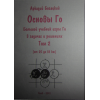
E-book for BIgo Reader (Windows): play through the diagrams on a board. Author: Роб ван Зайст, Ричард Бозулич. Pages: 208. Diagrams: 573. Text language: Russian.
After payment the book appears in your library: sign in to BIgo Reader with the e-mail of your order and it downloads automatically (up to 3 computers).
“Mastering the Basics of Go” series, volume 3.
“Making Good Shape”, 208 pp.
Richard Bozulich, Rob van Zeijst
Preface
Good shape is a subject that has not received sufficient coverage in Japanese Go literature. Although most books discuss the concept of shape, there is no book devoted exclusively to this subject. However, understanding what good shape is and being able to recognize these shapes are essential to improving your play and developing intuition. This will immediately help you find the strongest moves in the opening and in middle-game fighting.
The brain, as we know, consists of two hemispheres with different but complementary functions. The right hemisphere is responsible, for example, for recognizing geometric patterns, while the left handles analytical processes. Playing Go involves an interesting interplay between these two things. The right hemisphere provides the geometric vision needed to foresee the shape you should achieve, while the left provides the analysis needed to achieve that shape. Studying shape is an excellent way to develop and integrate both the brain’s geometric and analytical abilities.
Shapes are the building blocks of your groups. They determine whether your stones will work efficiently together or each go their own way. Good shape is a source of creative strength, while bad shape will cause you a great deal of trouble.
We consider shape from two perspectives. One is building good shape with your own stones; the other is finding ways to spoil your opponent’s shape. Keep in mind that good shape is a dynamic rather than a static structure; it can, for example, give you eye shape and thus an advantage in a running fight between groups.
This book provides extensive theoretical material on shape. The first chapter explains efficient combinations of stones. It then discusses thickness: how to use it, how to counter it, and how using it incorrectly can result in overconcentrated stones. Thin stones are then examined in contrast to thick stones, followed by a discussion of heavy and light stones and how all of this relates to the concept of sabaki, which is itself a method of making good shape.
The second chapter gives examples of standard shapes, both good and bad, such as ponnuki, the empty triangle, the center of three stones, playing on the head of two or three stones, and so on.
The main part of the book consists of 245 problems presented in Chapter 3. They provide the reader with extensive practical material for a deeper understanding of the lessons presented in the theoretical part of the book, as well as a wealth of examples of good shape and the tesuji needed to create these shapes. Even if you cannot solve most of these problems, this should not discourage you from studying them. The wealth of techniques demonstrated will encourage your brain to think in new ways about Go tactics and strategy.
The final chapter presents two professional games. These clearly illustrate that professionals give shape the highest priority when choosing their moves.
“Mastering the Basics of Go” book series
volume 1. “Five Hundred and One Fuseki Problems”
volume 2. “One Thousand and One Life and Death Problems”
volume 3. “Making Good Shape”



Reviews
There are no reviews yet.